Vitamin D in winter: how much, which form and what to pair it with
From October to March the sun in Bulgaria is too low for your skin to make much vitamin D. Learn how much adults typically take, how to read µg and IU, and which form to choose.

In this article
Vitamin D is the one nutrient that depends more on the sky than on your plate. In Bulgaria, summer sunshine lets most people make plenty, but from autumn to early spring it is a different story. Here is how much vitamin D adults typically take in winter, which form to choose and what it pairs well with.
Why winter makes a difference
Your skin makes vitamin D when UVB rays from the sun reach it. At Bulgaria's latitude – roughly 41 to 44 degrees north – the sun sits too low from about October to March for much UVB to get through, even on a bright day. Add shorter days, more time indoors and winter clothing, and your own production drops to very little, while reserves built up in summer gradually run down.
Only a few foods are rich in vitamin D: oily fish such as salmon, mackerel and sardines, egg yolks, and fortified products like some milks and breakfast cereals. People who rarely eat oily fish or spend most of the day indoors can find it hard to meet their needs in winter, which is why many European health authorities suggest adults consider a supplement in the darker months.
What vitamin D does
Vitamin D contributes to the maintenance of normal bones and normal muscle function, to the normal function of the immune system and to normal blood calcium levels. These are EU-authorised claims, and they apply as part of a varied, balanced diet and a healthy lifestyle – a supplement adds to that, it does not replace it. See the vitamin D category and our immune system goal page.
How much: µg, IU and the upper limit
Labels show vitamin D in micrograms (µg), international units (IU) or both. The conversion is simple: 1 µg = 40 IU.
- 10 µg = 400 IU
- 25 µg = 1,000 IU
- 50 µg = 2,000 IU
- 100 µg = 4,000 IU
The European Food Safety Authority (EFSA) sets the adequate intake for adults at 15 µg (600 IU) a day. Winter supplements for adults usually provide 10–25 µg (400–1,000 IU) a day. The EU tolerable upper intake level for adults is 100 µg (4,000 IU) a day from all sources combined – food, fortified products, multivitamins and every supplement you take. Don't go above it without medical advice. Children have their own doses and limits, so follow the label and ask your paediatrician.
You will also see %NRV on the label. The nutrient reference value for vitamin D is only 5 µg, so a 25 µg product shows 500% NRV – that is normal, not a sign of an excessive dose.
Which form: D3 or D2, drops or capsules?
Vitamin D3 (cholecalciferol) is the form your skin makes and the one most supplements use; it comes from lanolin (sheep's wool) or, in vegan products, from lichen. D2 (ergocalciferol) comes from fungi and yeast. D3 tends to keep blood levels up more effectively, so most people choose it.
The format is mostly a matter of preference:
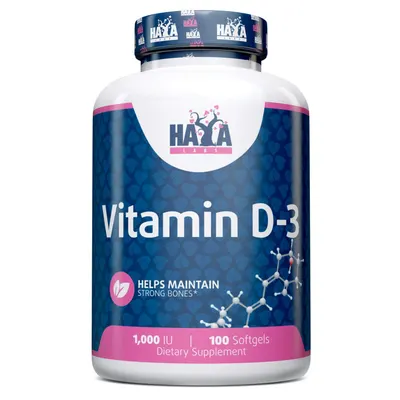
- Softgels and capsules give a fixed dose that is easy to track – one a day and you are done.
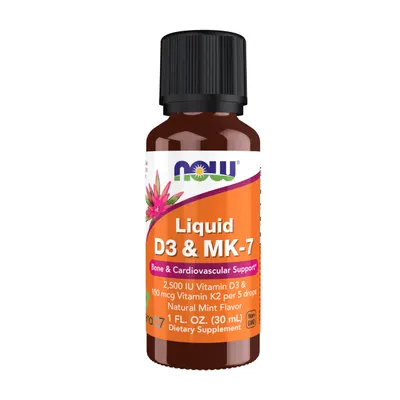
- Drops let you adjust the dose and suit anyone who dislikes swallowing capsules. Check how many drops make one serving.
- Combined products add vitamin K2, and sometimes calcium, in one capsule or bottle.
- New
What to pair it with
A meal that contains fat. Vitamin D is fat-soluble, so take it with a proper meal – eggs at breakfast, a salad with olive oil, or alongside your omega-3 capsule – rather than with just a coffee.
Vitamin K2. Many products combine D3 with K2, usually as MK-7. Vitamin K contributes to the maintenance of normal bones, which is why the two are often sold together. If you take anticoagulant (blood-thinning) medication, do not take vitamin K without speaking to your doctor first.
Calcium, if your diet is low in it. Most people get enough calcium from yoghurt, cheese and leafy greens, but a combined calcium, D3 and K2 product may suit those who eat little dairy. See our calcium products.
- NewBestseller
- New

Test rather than guess
The only way to know your vitamin D status is a blood test for 25-hydroxyvitamin D, which your doctor can arrange. It is especially worthwhile if you plan to take higher doses or spend very little time outdoors, and a second test after a few months shows whether your dose suits you.
Stick to the recommended daily dose on the label and add up the vitamin D from every product you use. If you are pregnant or breastfeeding, take medication or have a health condition, ask your doctor or pharmacist before you start. If you train, vitamin D is only one piece of the puzzle – see how to choose a protein powder for another.
Frequently asked questions
When should I start taking vitamin D in Bulgaria?
Many people start in October and continue until March or April, when the sun is high enough again. If you also spend most of the summer indoors, your doctor may suggest taking it all year round.
Is it better to take vitamin D in the morning or the evening?
The time of day matters less than taking it with a meal that contains some fat. Choose whichever meal you are most likely to remember.
Can I take too much vitamin D?
Yes. Very high intakes over a long period can push blood calcium too high. Stay within the label dose and below 100 µg (4,000 IU) a day from all sources unless your doctor advises otherwise.
Do I still need vitamin D if I eat fish regularly?
Oily fish two or three times a week makes a real contribution, but with little winter sun some people still find it hard to reach the reference intake from food alone. A blood test is the easiest way to check.
This information is for general education and does not replace advice from a doctor or pharmacist. Food supplements are not a substitute for a varied, balanced diet and a healthy lifestyle. Do not exceed the recommended daily dose.